5 Signs Your Budget Isn’t Working (And What to Do Instead)
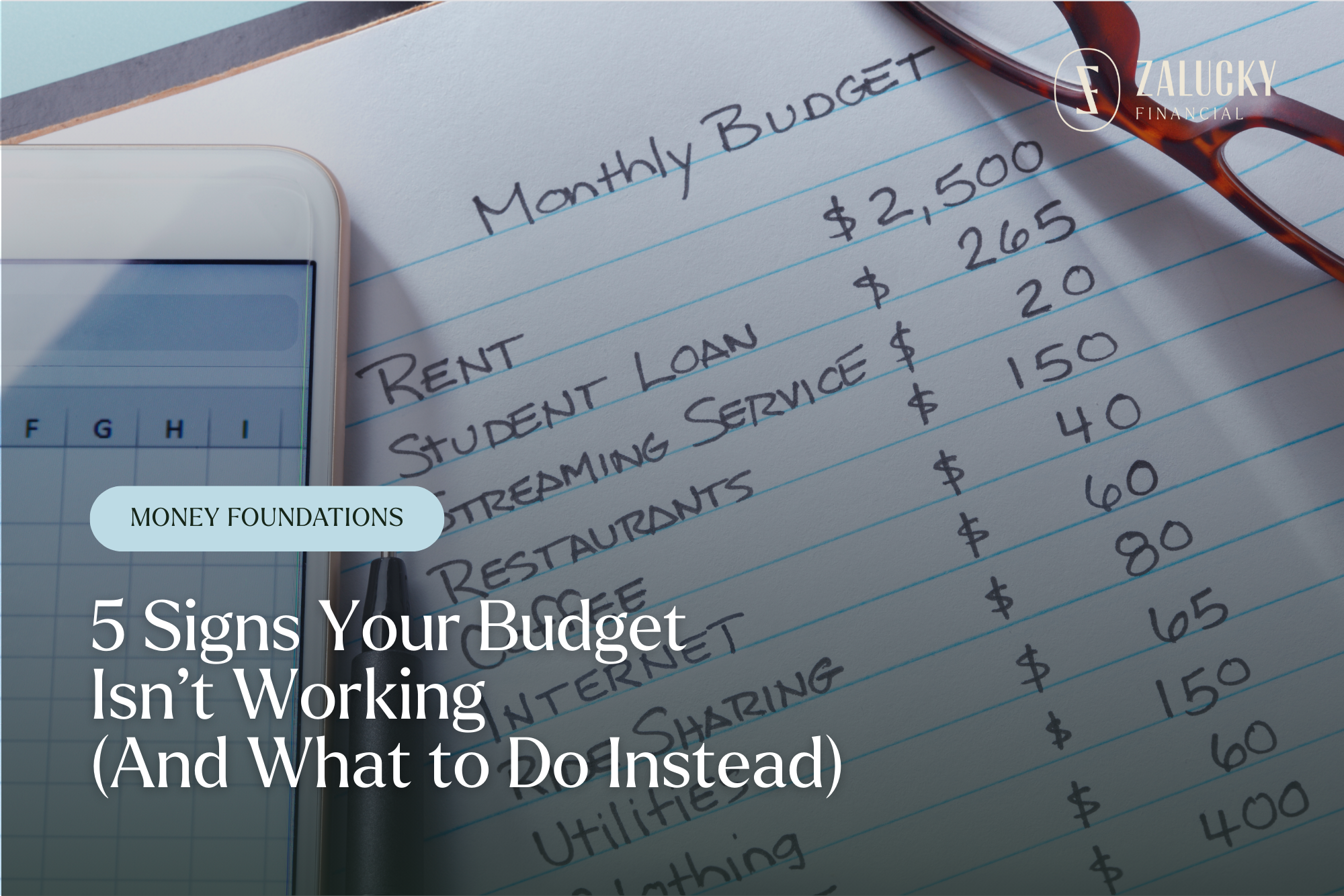
You created the budget.
You even stuck to it — for a while.
And yet, somehow, your money still feels out of control… or like a constant battle you’re quietly losing.
If that sounds familiar, here’s some reassurance you may not have heard before: most people don’t fail at budgeting. Their budgets fail them.
Budgets that ignore your habits, personality, values, and real-life responsibilities aren’t built to last. So instead of asking, “Why can’t I stick to this?” a better question is: “Is this system actually designed to support my life?”
Part of the problem is that we use the word budgeting to describe two very different exercises — and most people are only taught one of them.
Let’s look at the most common signs a budget isn’t working — and what to do instead.
Sign 1: You Dread Looking at It
If opening your budget makes you feel anxious, guilty, or overwhelmed, something is off.
A budget that feels restrictive or punitive often creates emotional resistance. And when money feels scary, avoidance usually follows — which only makes things feel worse.
This is especially common when budgeting only looks forward — “I should spend $500 on groceries” — without first looking backward at what you’ve actually been spending. Without that context, budgeting can start to feel like punishment instead of information.
A good financial system shouldn’t feel like a test you’re failing. It should feel supportive, clear, and grounded in reality — not fear.
Sign 2: You Constantly Override It
You budget $500 for groceries…
Then spend $700.
Every. Single. Month.
This isn’t a lack of discipline. It’s data.
When a budget consistently gets overridden, it’s giving you valuable feedback about your real spending patterns. The problem isn’t that you “can’t follow the rules” — it’s that the rules weren’t built around your actual life.
This is where backward-looking budgeting matters most. Before deciding what you want to spend, it’s essential to understand what you have been spending — and why.
Realistic budgeting means starting with how you actually spend, not how you think you should spend.
Sign 3: You Don’t Know If It’s “Working”
You might be tracking expenses, but you’re still unsure what the outcome is.
Are you saving more?
Feeling calmer?
Making decisions with confidence?
If your budget doesn’t help you answer those questions, it’s missing the point. A strategy without clear outcomes isn’t helpful — it’s just busywork.
Looking backward at your real numbers helps you answer an important question first: Am I happy with how my money is being used? From there, you can decide what — if anything — you want to change moving forward.
This is where many people benefit from tools like the Smart Budget, which focuses on clarity and visibility — not restriction — so you can actually see what your money is doing and why.
Sign 4: It Feels Like a Diet
All rules and restriction. No flexibility. No joy.
If your budget is built entirely around “no,” you’ll eventually rebel against it — just like any overly rigid diet. That doesn’t make you weak; it makes you human.
When budgeting skips the step of understanding your real behavior and jumps straight to control, it often turns into an exercise in self-judgment instead of self-awareness.
Financial strategy should support your values and lifestyle, not try to erase them. A system that allows for enjoyment and progress is far more sustainable than one that relies on constant self-control.
Sign 5: You’ve Abandoned It… Again
If you’ve tried budgeting multiple times and eventually walked away each time, it’s easy to assume the problem is you.
It’s not.
More often, the issue is that the budget was never designed as a system — just a short-term fix. Without automation, flexibility, and regular review, even the best intentions fall apart.
This is often the result of starting with forward-looking rules before understanding your real numbers and habits. When you don’t trust the numbers, it’s almost impossible to trust the plan.
This is usually the moment where it’s time to shift from “I need a better budget” to “I need a better money system.”
What to Do Instead
Instead of forcing yourself into a rigid structure, focus on building a system that works with you:
Rebuild around your real goals, habits, and responsibilities
Start by reviewing your past spending to understand your data — without judgment
Use automation to reduce decision fatigue
Schedule intentional monthly or quarterly reviews, not daily check-ins
Focus on clarity, not control
Once you understand what’s been happening with your money, you can calmly and intentionally decide what you’d like to adjust going forward.
This is the difference between traditional budgeting and a strategic financial system. Tools like the Smart Budget can be a great starting point — especially when paired with guidance that helps you interpret the numbers and adjust the system over time.
The Problem Isn’t You — It’s the Plan
Budgets aren’t one-size-fits-all. And struggling with one doesn’t mean you’re bad with money.
When your financial plan is aligned with your values, lifestyle, and goals, it stops feeling like restriction — and starts feeling like freedom.
If you’re ready to create a system that actually works for you, I’d love to help.
Start with the Smart Budget for clarity, or book a 1:1 consultation and we’ll build a customized strategy together.
You don’t need more willpower. You need a plan that fits your life.

Hi, I’m Roxy
With over 15 years of experience navigating the complexities of Wall Street and Bay Street, I’m here to simplify your personal finances and make sure your hard-earned money is working just as hard for you.
My goal is to help you achieve financial clarity and create a strategy that aligns with your life goals, so you can enjoy more of what matters most.
Like This Post? You’ll Love These